Since 1994, the Department of Electronic Engineering at Shantou University has been developing steadily with the long-term support of the Li Ka Shing Foundation. In 1998, the Signal and Information Processing discipline was authorized to offer a master's degree program and began enrolling postgraduate students. In 1999, the discipline was designated as a key construction area under the "211 Project," and subsequently became a Guangdong Provincial Key Discipline in 2000. In recent years, the discipline has achieved remarkable progress. In 2020, Shantou University's "Engineering" discipline, for which this department serves as a key core, entered the top 1% of the Essential Science Indicators (ESI) global ranking for the first time. In 2021, the Electronic Information Engineering program and the Communication Engineering program were recognized as National First-Class Undergraduate Programs and Provincial First-Class Undergraduate Programs, respectively.
Program Objectives:
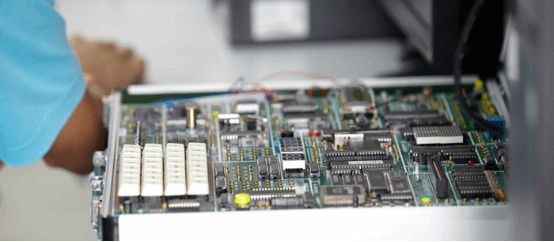
The Department of Electronic Engineering pursues interdisciplinary development as its strategic direction, with a focus on intelligent information systems, biomedical signals and imaging, vision and industrial intelligence, and wireless communications. It is committed to producing research outcomes of significant impact, with distinctive strengths particularly in intelligent processing of medical images, integrated circuit chip inspection, optical fiber sensing, and intelligent optimization algorithms.
Research Teams:
The department currently has over 30 full-time faculty members, all of whom are qualified to supervise master's students. The faculty team is young and diverse, with 100% holding a Ph.D. degree. More than 50% of the faculty have overseas study or research experience. The research teams include three doctoral supervisors, ten professors, and several scholars recognized at the national and provincial levels.
Research Grants, Achievements, and Awards:
In the past five years, the department has undertaken more than 110 research projects, including Key Projects of the National Natural Science Foundation of China (NSFC), General Projects of the NSFC, Major Special Projects on New Generation Artificial Intelligence of the Ministry of Science and Technology, as well as Key Projects of the Guangdong Natural Science Foundation and Major Special Projects of Guangdong Province in science and technology. The total research funding exceeds 40 million RMB. These efforts have yielded significant research results, including over 60 national invention patents, more than 800 million RMB in economic benefits generated for local enterprises, and over 300 high-impact academic papers (including more than 30 CAS Top Tier—Journal Ranked in Q1—papers). Among these, seven papers have been recognized as ESI Highly Cited Papers. Additionally, three faculty members have been ranked by Stanford University among the top 2% of scientists worldwide, and the department has received two provincial or ministerial-level awards for scientific and technological progress.
Laboratory and Research Facilities:
The department is home to several provincial and municipal research platforms, including the Guangdong Provincial Engineering Technology Research Center for Artificial Intelligence and Modern Ultrasound and the Guangdong Provincial International Cooperation Base for Evolutionary Intelligence and Robotics. It also maintains multiple undergraduate teaching laboratories equipped with state-of-the-art research facilities and experimental equipment, providing rich hands-on platforms for both undergraduate and graduate students.
Graduate Education:
The Department of Electronic Engineering has accumulated extensive experience in graduate education. Leveraging joint training bases, key laboratories of the Ministry of Education, and doctoral programs at the medical college, the department trains master's and doctoral students within a multidisciplinary, cross-disciplinary framework. Academic exchange activities are organized annually, supported by a dedicated academic exchange fund that encourages graduate students to attend national and international conferences. On average, each graduate student publishes more than 1.2 academic papers during their studies, and many have received National Graduate Scholarships and other awards. Currently, the department has over 200 master's students and nine doctoral students. Most graduates have entered prestigious domestic and international companies, research institutes, or pursued doctoral degrees at top Chinese "Double First-Class" universities or overseas institutions, thereby contributing significantly to the cultivation of high-quality professionals for both the nation and the local region.
